
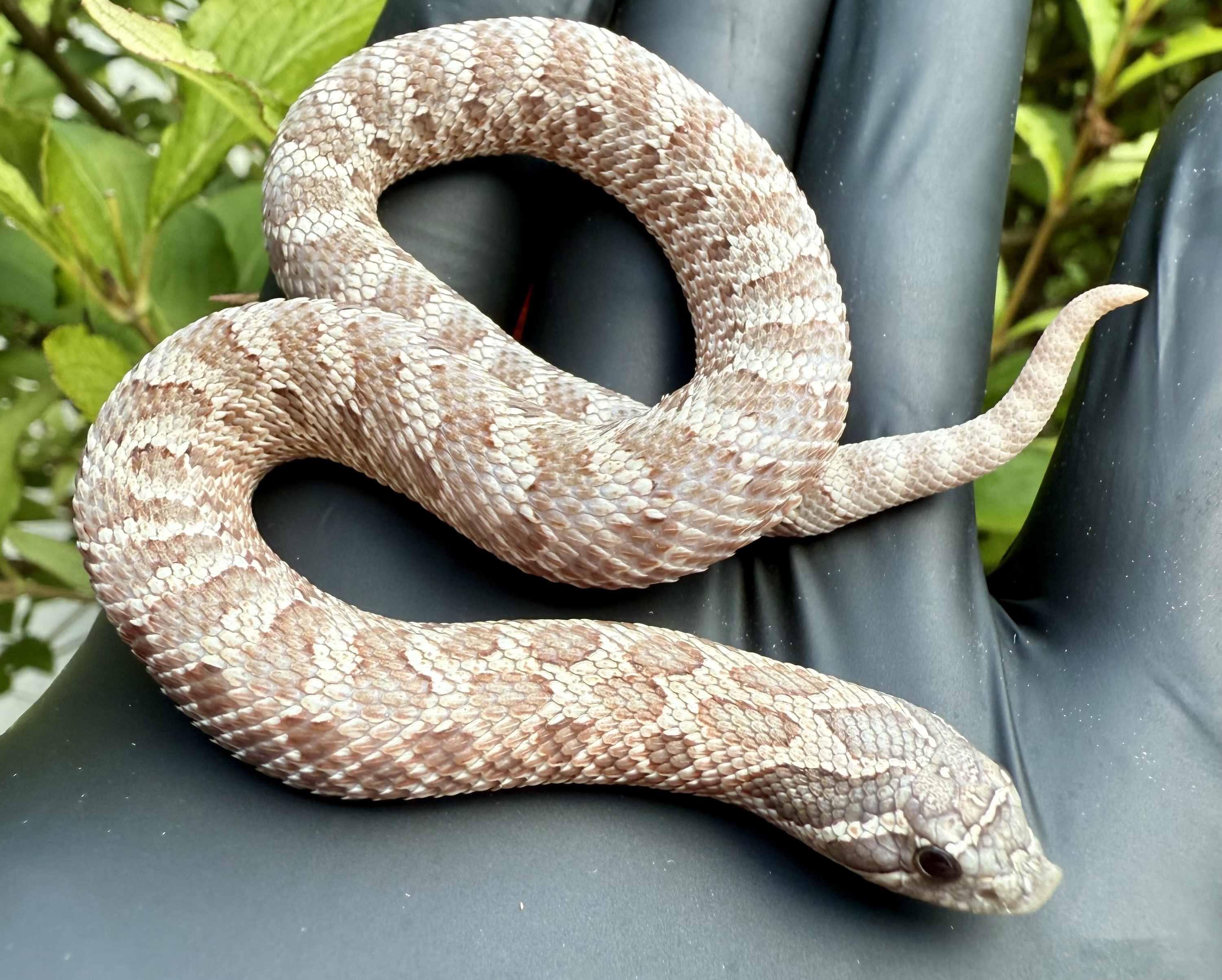
Photo by Karyn Tapley, MD, MBA · JMGReptiles · Instagram
Moonstone, 50% het Sable, 50% het Toffee
Got a Moonstone photo? Submit it to the Public Morph Guide.
Component genes
Your MorphDex
Own one? Track the morphs in your collection — add it to your MorphDex.
Log in to start your MorphDexAlso known as
Superarctic Lavender
The genetics
Lavender
Lavender is a recessive, tyrosinase-positive (T+) form of albino. It produces a soft gray-lavender body with a purple tongue and eyes; hatchlings often carry a reddish tint that fades to lavender-gray with age.
Arctic x2
Superarctic is the two-copy (super) form of the Arctic gene — not a separate gene. It produces a stronger, more dramatic expression of the Arctic look: brighter, cleaner, often with very strong black-and-white contrast. It occurs when a hognose inherits Arctic from both parents.
What makes a Moonstone
- Two copies of Lavender — recessive, so it only shows when paired up.
- Two copies of Arctic — the 'Superarctic' super form.
This describes the genetics of the animal itself — not the odds from a pairing. Outcome odds are the Genetics Calculator's job.
More in the Lavender family
The same base with its Arctic and Anaconda modifier variants.
Lavender
Lavender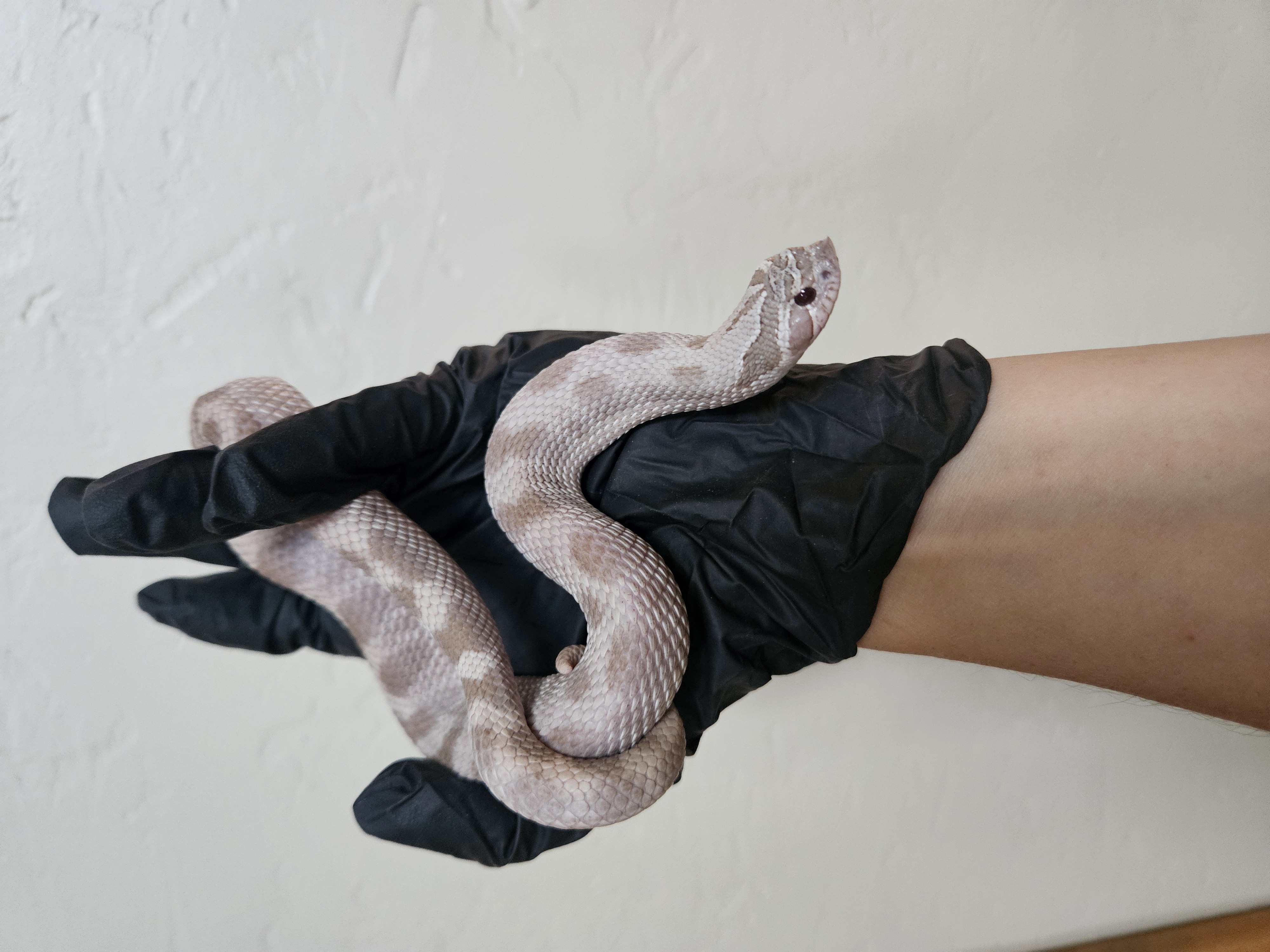
Lavender Anaconda
Lavender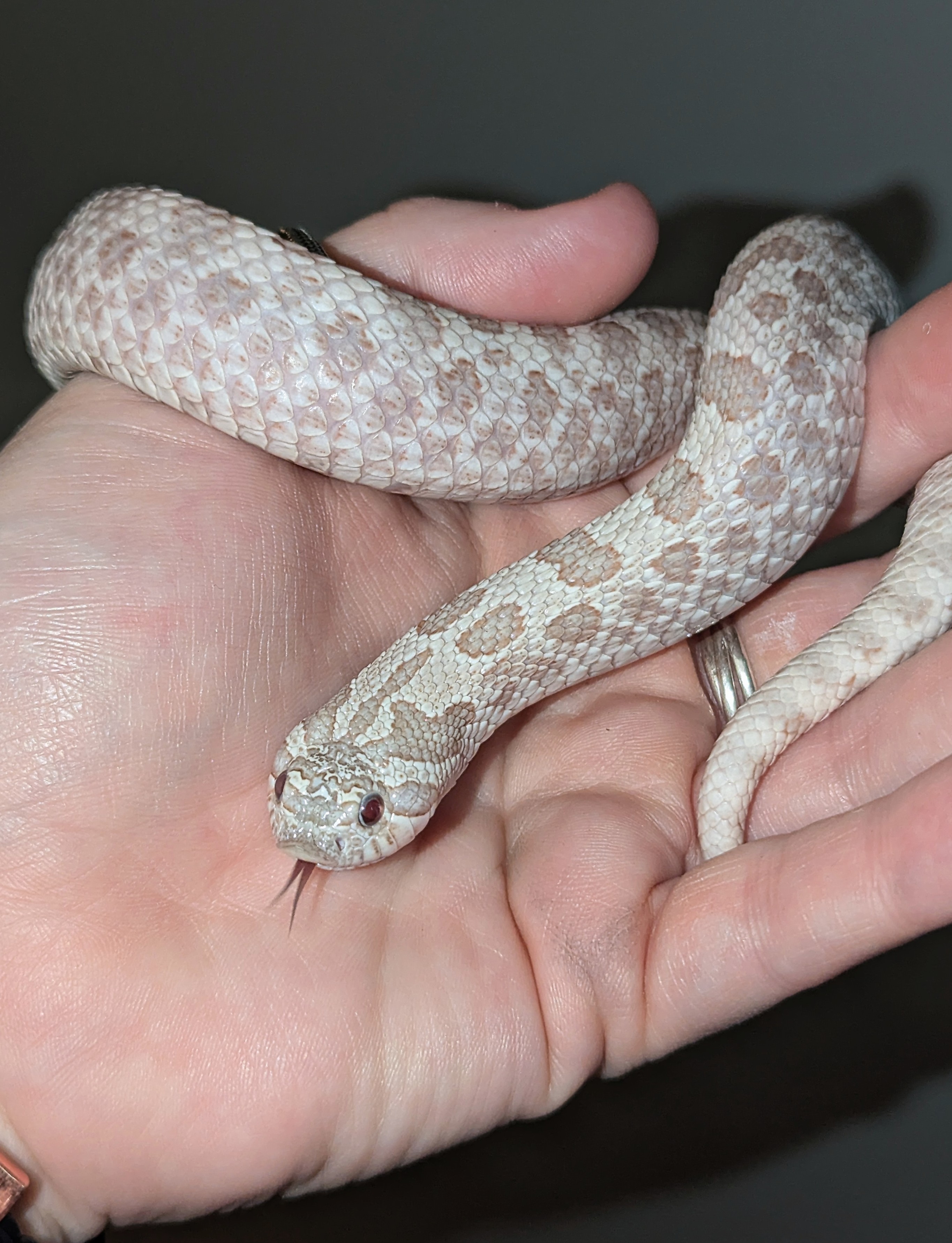
Moondust
LavenderLavender Superconda
Lavender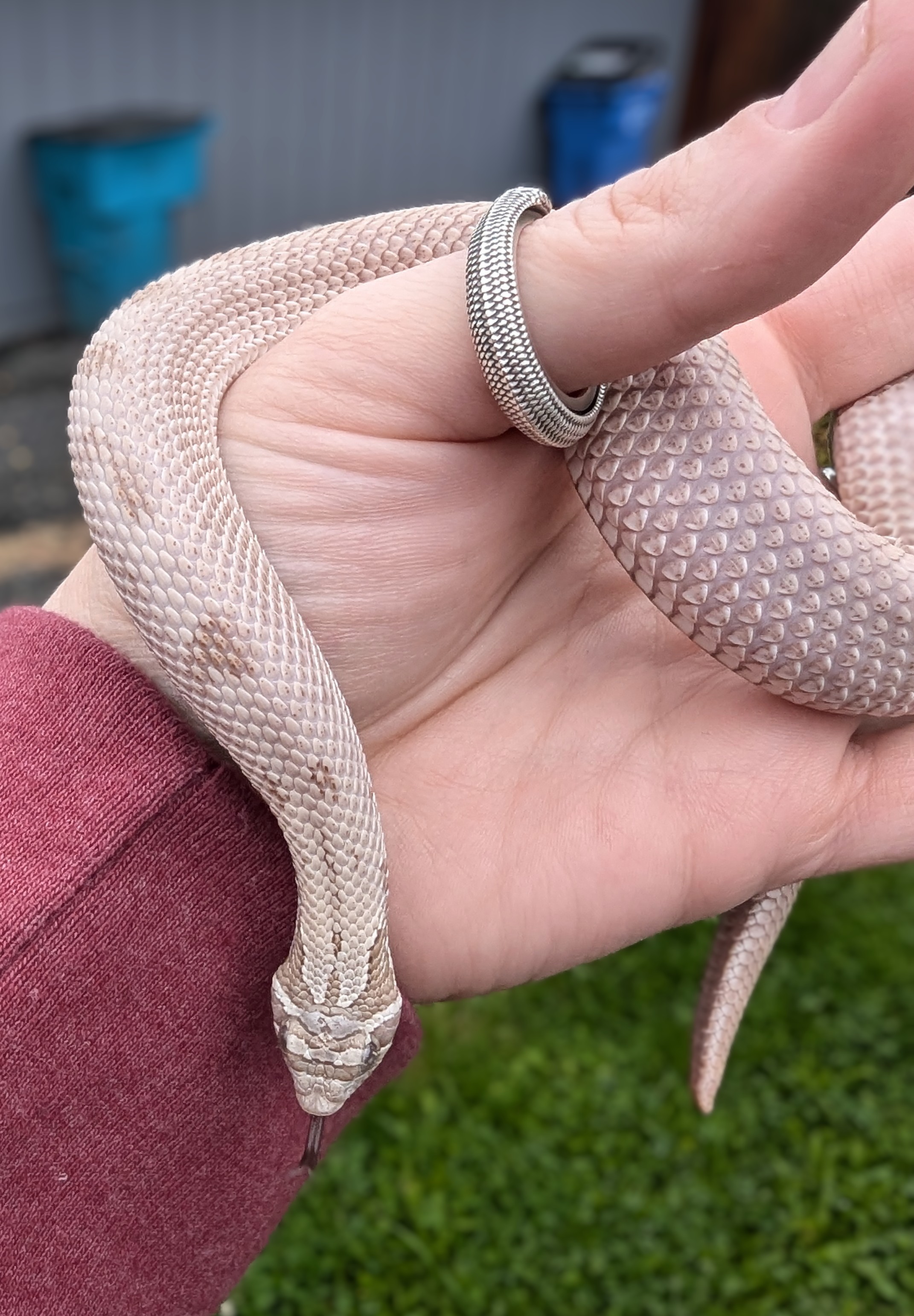
Moonstruck
LavenderMoonbeam
Lavender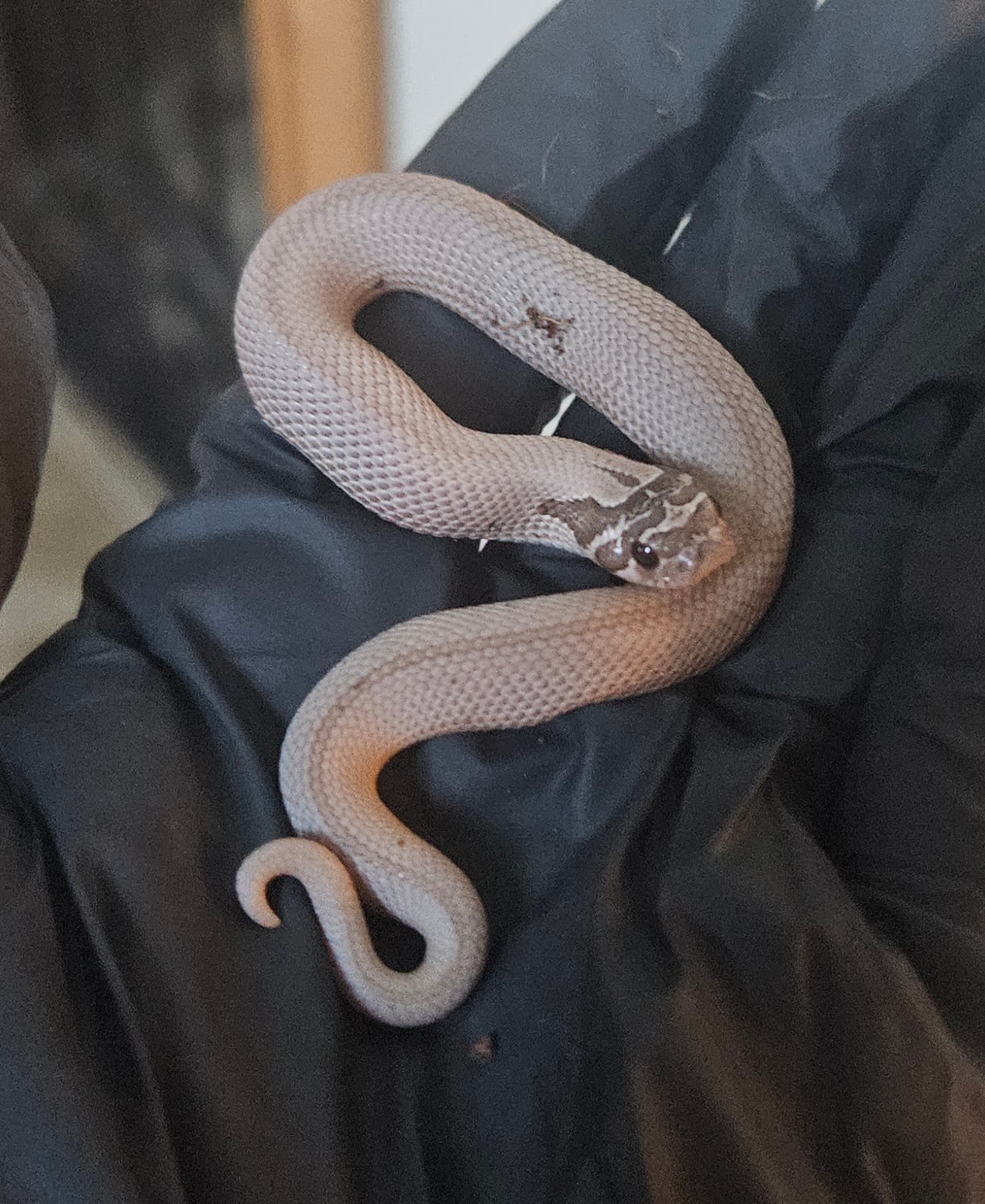
Moonlight
LavenderSuper Moon
LavenderHave a Moonstone photo?
Help build the Public Morph Guide — got a clear, full-body photo of a real one? Submit it and get credited. Every photo is reviewed before it appears.