
Photo by Christine Cotter · Big Easy Hogs · Instagram
Hatchling Arctic Coral Conda
Got a Coral Arctic Anaconda photo? Submit it to the Public Morph Guide.
Component genes
Your MorphDex
Own one? Track the morphs in your collection — add it to your MorphDex.
Log in to start your MorphDexAlso known as
Arctic Coral Conda
The genetics
Albino
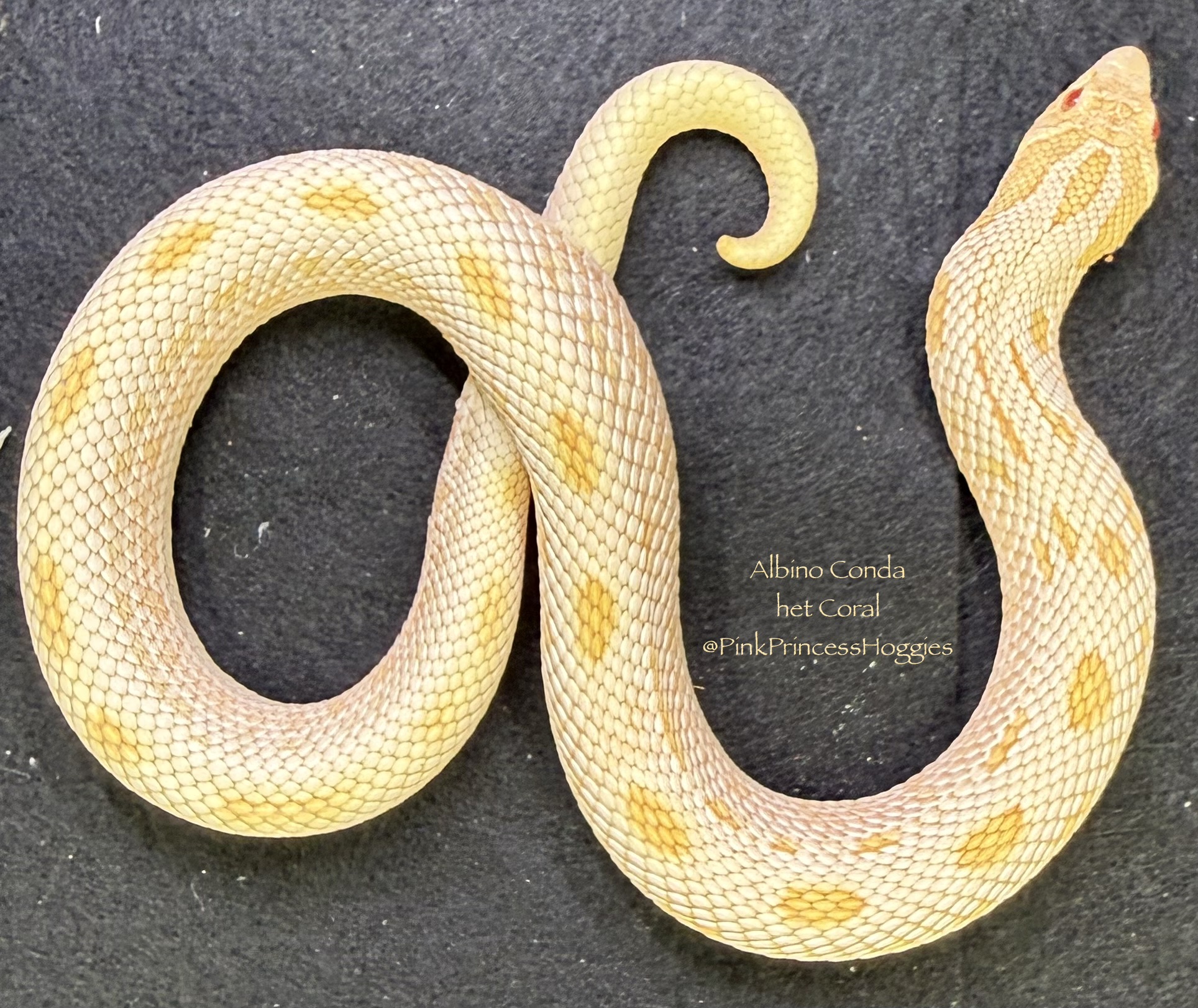
Albino is a recessive, amelanistic mutation in which melanin is absent entirely. The normal blotched pattern stays visible but loses all black pigment, leaving red, orange, or yellow tones with red eyes.
Lavender
Lavender is a recessive, tyrosinase-positive (T+) form of albino. It produces a soft gray-lavender body with a purple tongue and eyes; hatchlings often carry a reddish tint that fades to lavender-gray with age.
Arctic
Arctic is an incomplete-dominant gene that tends to brighten, clean up, and cool the overall appearance of a Western Hognose. Arctic animals often show a lighter base color, sharper contrast, cleaner pattern, brighter coloration, white outlines around pattern elements, and speckling/flecking compared to non-Arctic animals.
Anaconda
Anaconda, often shortened to Conda, is an incomplete-dominant pattern mutation. One copy reduces the normal blotched dorsal pattern, creating a cleaner, more open, simplified appearance — the pattern becomes reduced, broken, or simplified.
What makes a Coral Arctic Anaconda
- Two copies of Albino — recessive, so it only shows when paired up.
- Two copies of Lavender — recessive, so it only shows when paired up.
- One copy of Anaconda — the single-gene form.
- One copy of Arctic — the single-gene Arctic form (incomplete dominant).
This describes the genetics of the animal itself — not the odds from a pairing. Outcome odds are the Genetics Calculator's job.
More in the Coral family
The same base with its Arctic and Anaconda modifier variants.
Coral
CoralCoral Frost
Coral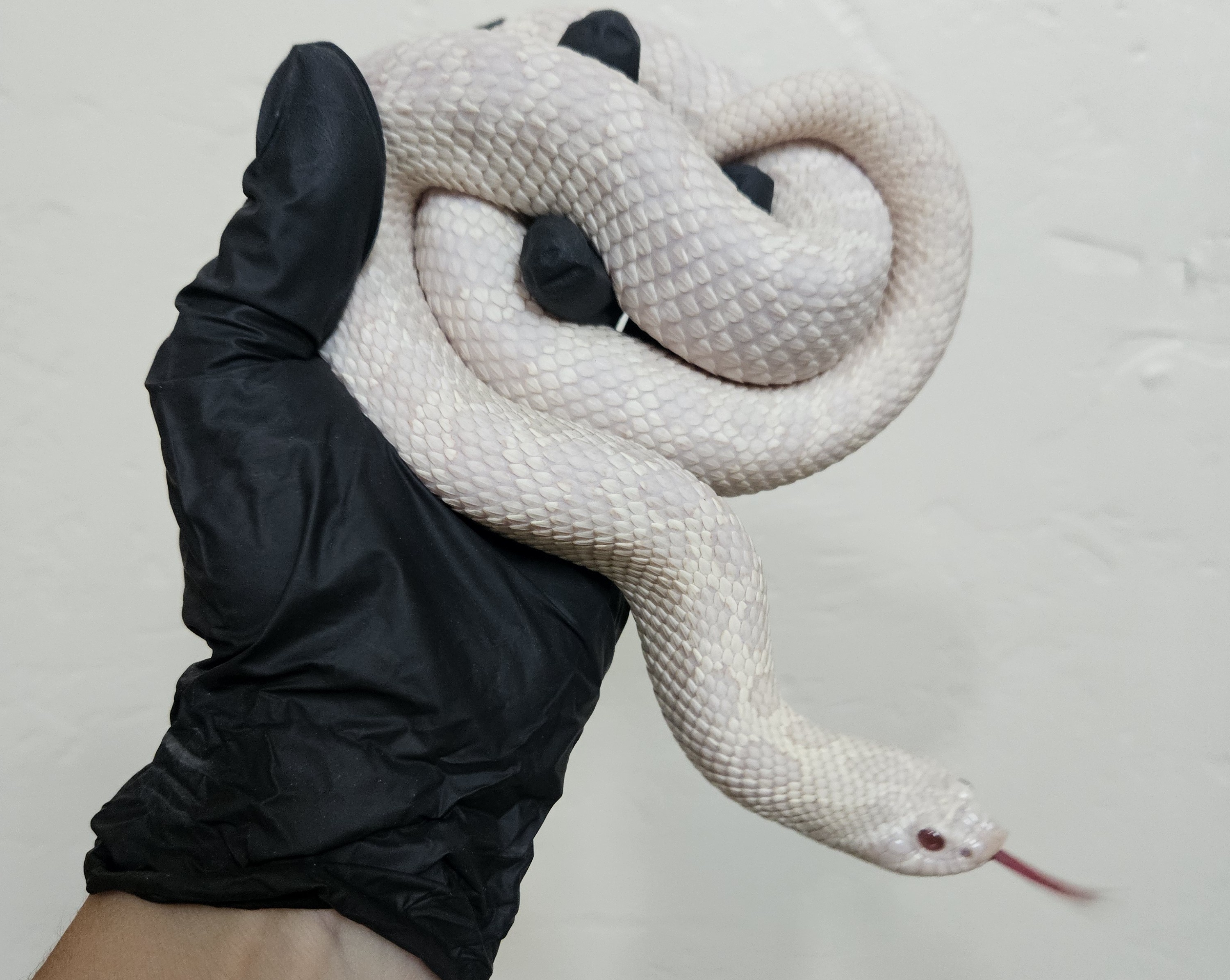
Coral Arctic
CoralCoral Anaconda
CoralCoral Superconda
Coral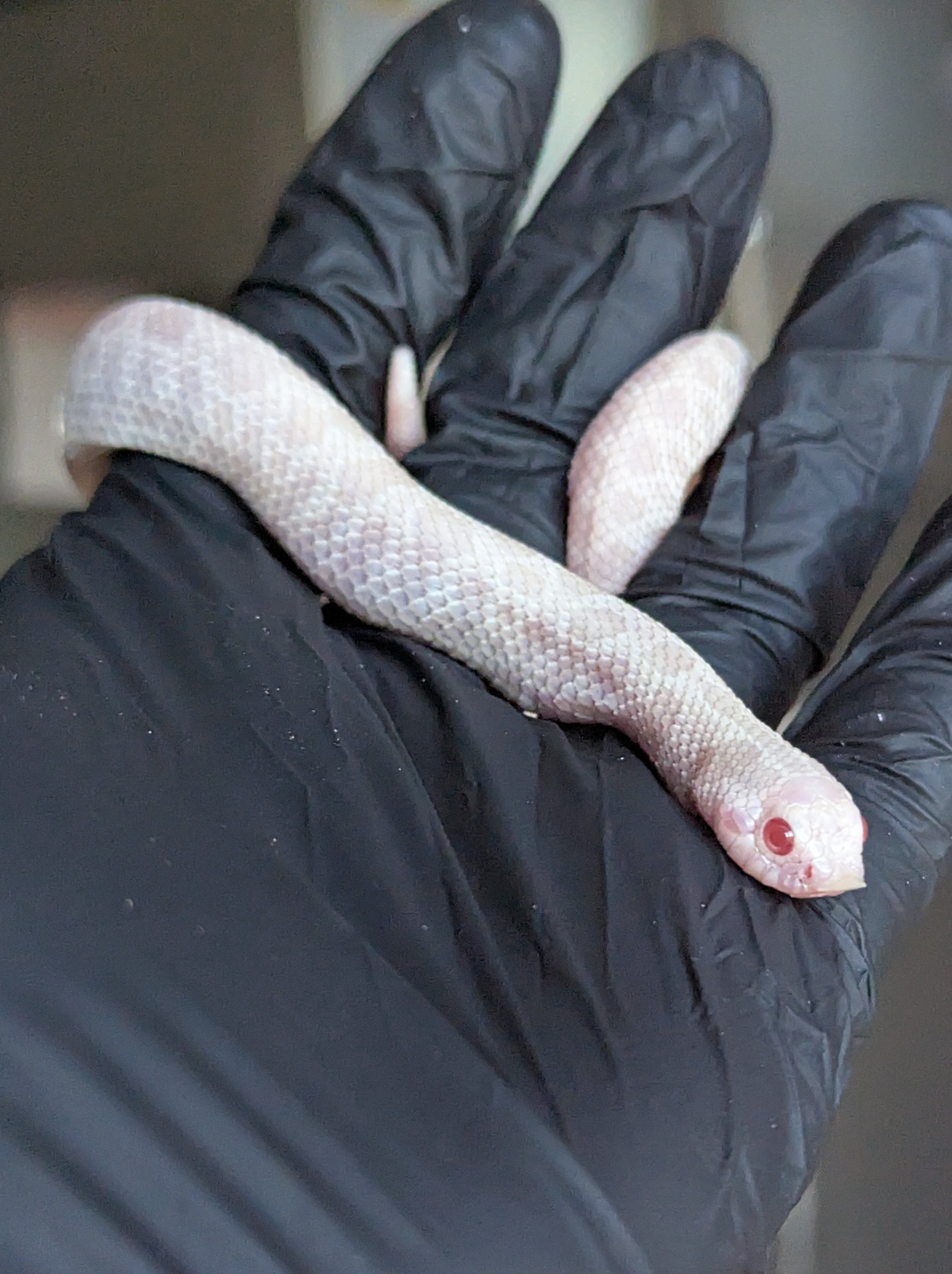
Crystal Diamond
CoralFairy Floss
CoralCrystal Diamond Anaconda
CoralCrystal Diamond Superconda
CoralHave a Coral Arctic Anaconda photo?
Help build the Public Morph Guide — got a clear, full-body photo of a real one? Submit it and get credited. Every photo is reviewed before it appears.